
Drones in forest firefighting: where the intake-to-drop chain gets stuck
In the forest, aerial firefighting is not there to replace ground crews but to solve the problem of people who cannot climb and vehicles that cannot reach. This article breaks the chain into three stages: intake, transport and drop.
A forest fire and a city fire are two different problems. In a city fire the water is downstairs in the hydrant and the hard part is getting it to the burning floor; in a forest fire the water is not at hand at all — the slopes are steep, fire engines cannot get in, and carrying water up on foot is extremely inefficient. Aerial firefighting covers exactly that gap.
First link: is the intake close enough
The pace of the whole chain is set by the water intake point. Wucheng in Jinhua puts its take-off points and equipment stores above 900 m and prepares several backup intake points (streams, ponds, reservoirs): every minute cut from a one-way trip lifts the water delivered per aircraft-hour.
Second link: balancing water per trip against round-trip time
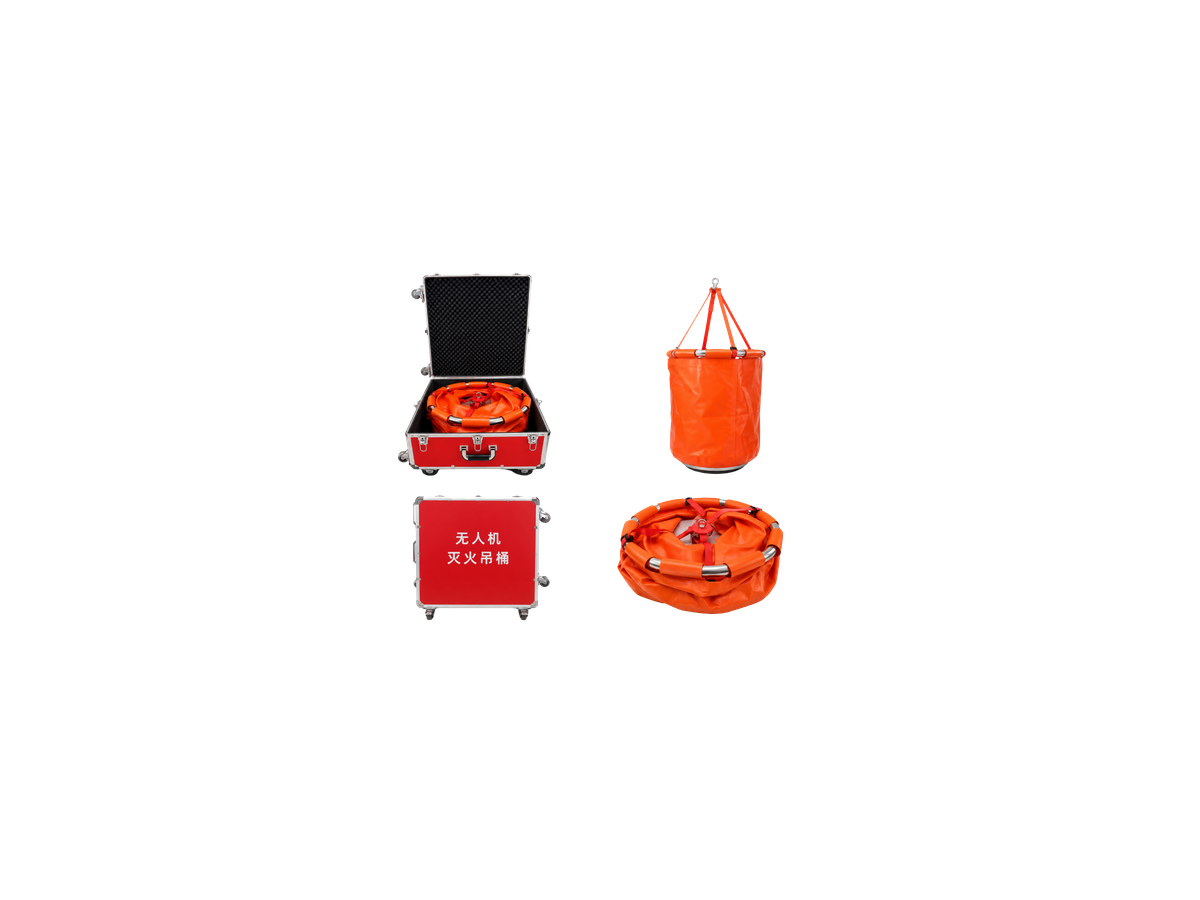
That is the most realistic trade-off in forest firefighting. A bigger bucket means more water per trip, but payload and endurance are hard limits; an oversized bucket in hot, high-altitude conditions actually lengthens each round trip. Our rigid bucket fixes each drop at 70-80 L, a compromise chosen for many trips and steady results; in testing that corresponds to a 90% drop hit rate.
Third link: dropping accurately beats dropping more
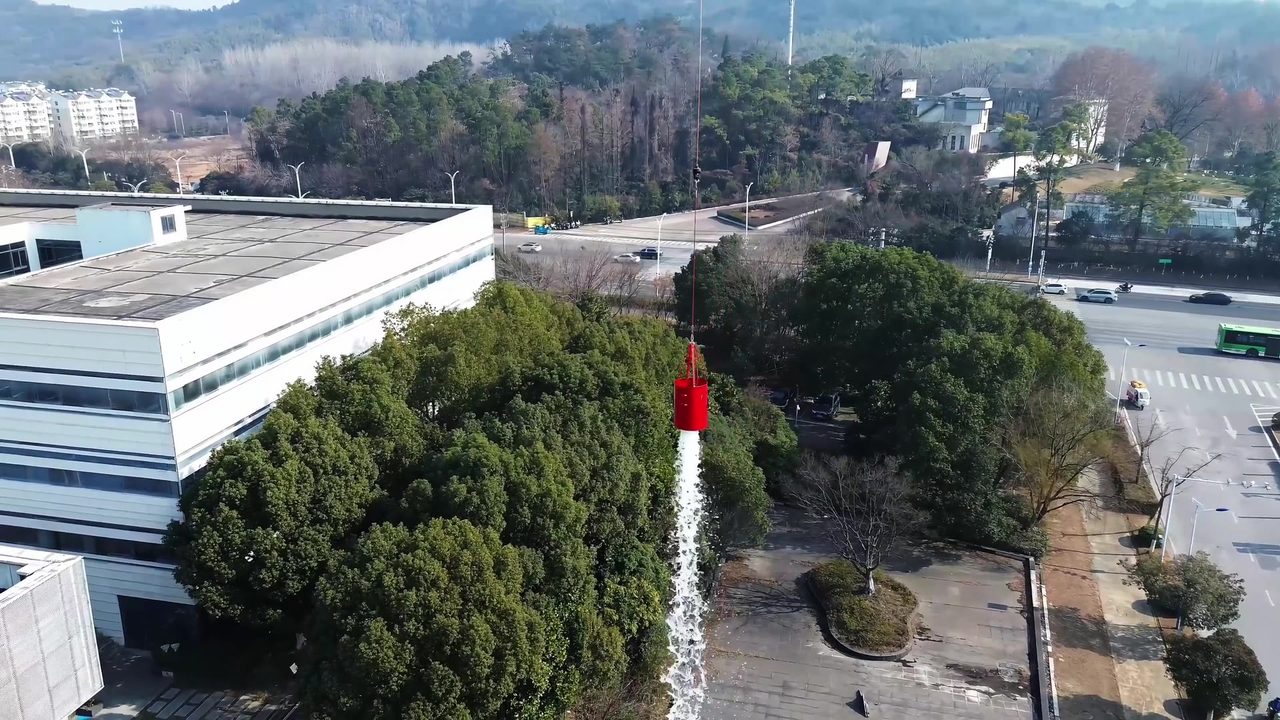
The place that really needs water is usually not the centre of the fire line but ahead of the head, the top of the canopy and the cliff side — those spots decide whether the fire spreads. Drop accuracy is therefore worth more investment than volume per trip: the same amount of water only puts out a fire if it lands in the right place.
A few key numbers on this chain
- Intake layout: streams, mountain ponds and reservoirs prepared as several options, ranked by one-way travel time
- Water and rhythm: the rigid bucket carries 70-80 L per drop, chosen for many trips and steady results
- Drop accuracy: valve linear over 0-100% with ≤ 0.6 s response, dropped in steps to match the fire front
- Swapping and moving: the soft bucket folds away and one vehicle can move it on the ground, with no paved road needed
What is still unsolved on this chain
- Launch windows at night and in strong wind are still limited by flight safety
- When several spots catch fire at once, fleet scheduling and airspace coordination still rely on human judgement
- In the mountains blocked signals limit data return, which blunts situational awareness at the fire
Linking intake, transport and drop into a repeatable process is worth more than piling everything on one heavy-lift aircraft — It is also why, when a county builds a UAV firefighting force, the first decision is the intake layout, not the aircraft model.