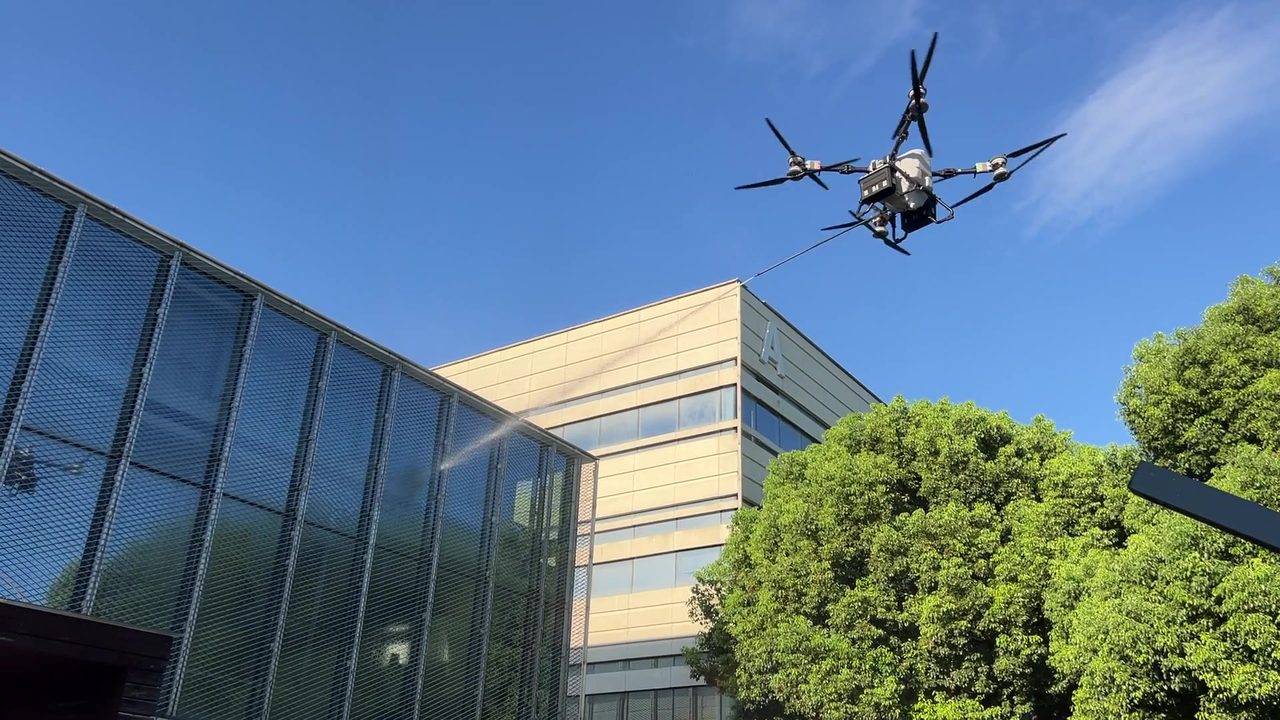
Airborne firefighting water tank system launched: 75 L of self-contained water, one firefighting run per flight
The airborne tank with a high-power pump completes a firefighting run with no ground supply; range ≥ 20 m and flow ≥ 60 L/min cover canopy and cliff fires.
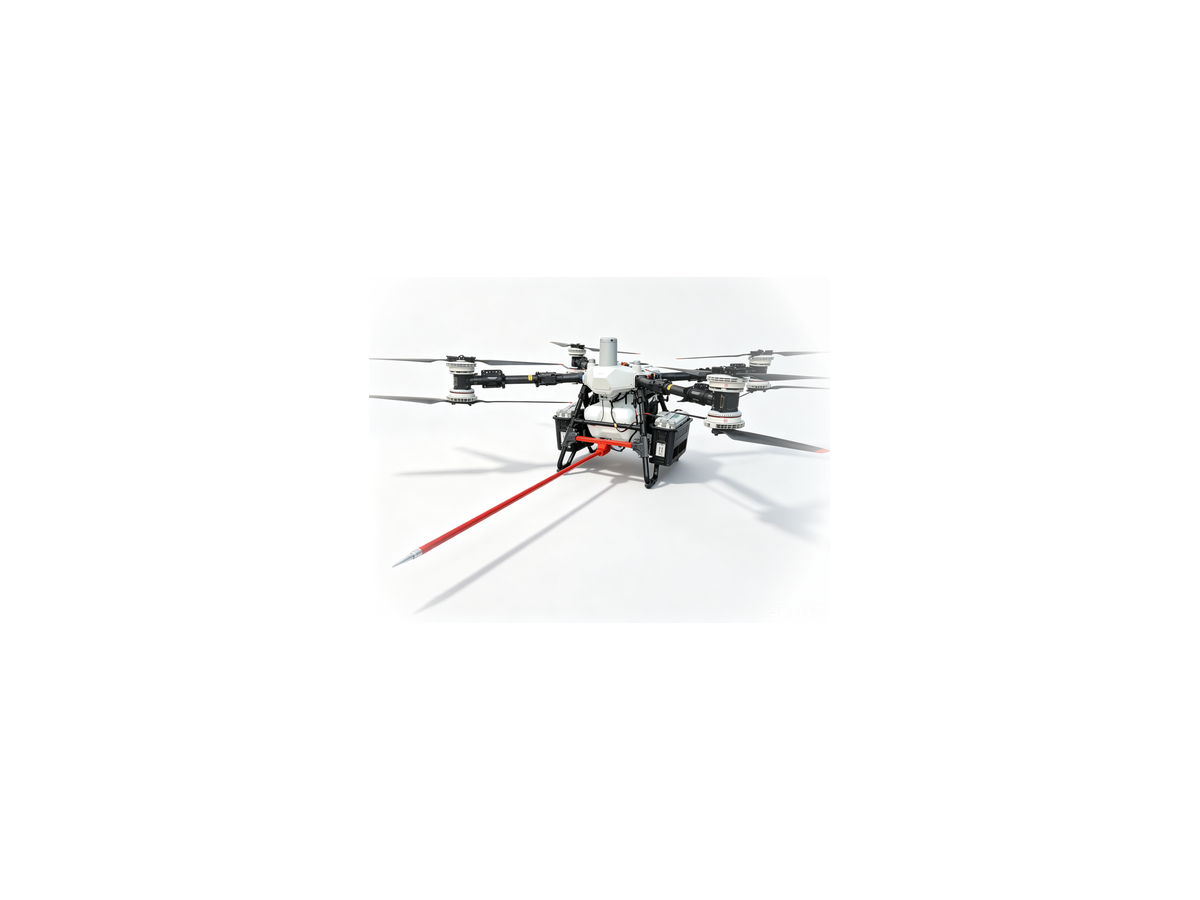
The new product is the high-rise firefighting water tank system: a 75 L airborne tank with a high-power pump needs no ground water supply and completes one firefighting run per flight on its own. Its role is first on scene: hold the fire down before the fire engine has laid its main line.
Key parameters
- Tank capacity 75 L, pump power ≥ 2 kW, pressure ≥ 1 MPa
- Max. flow ≥ 60 L/min, spray distance ≥ 20 m
- Control range ≥ 20 km with 4G / PSDK remote communication
- Control via DJI Pilot2 with electric pressure adjustment
- Operating environment -20℃ to +55℃, compatible with water-based agents
Why the design does not run a water supply line
In firefighting the slow part is rarely the drop itself but taking on water and getting to the fire. In high-rise buildings, mountain forest and chemical parks, ground lines either cannot reach or take too long to lay. An onboard tank limits water per trip but buys arrival-and-work, which moves the response window earlier.
The system covers canopy and cliff fires — Ground hoses cannot reach fire points like these, yet they are exactly where reignition tends to happen.
How it shares the work with the other firefighting payloads
- Firefighting water tank system: 75 L tank on board, ready on landing, for first-on-scene suppression
- Ember suppression system: 4 nozzles / 2 pumps covering over 220 ㎡, used to mop up reignition points
- Firefighting bucket: 70-80 L per drop, tied to an intake point, for sustained supply and cooling
- Airborne water cannon: effective range ≥ 35 m, used to close in on specific fire points at windows and balconies
Setup and operation
The whole unit mounts with quick-release hardware, is controlled through DJI Pilot2 and supports electric pressure adjustment — On scene the fire decides whether it is a continuous spray or pulsed drops, with no hardware changes on the ground. Remote communication covers 4G and PSDK with a control range of at least 20 km, so the operator can stay at a safe distance while working.
We treat it as first on scene, handing over to the ground fire engine rather than replacing it: suppress the fire before the engine arrives, then switch to cooling and reignition suppression once it is on site.