
“Tianyan Zhidun” airborne multi-mode detection system wins third prize at the BRICS Industrial Innovation Contest
Developed together with the Nanjing Public Security Bureau, it entered the international final on a first-prize domestic result and took third prize at the 2026 BRICS Industrial Innovation Contest.
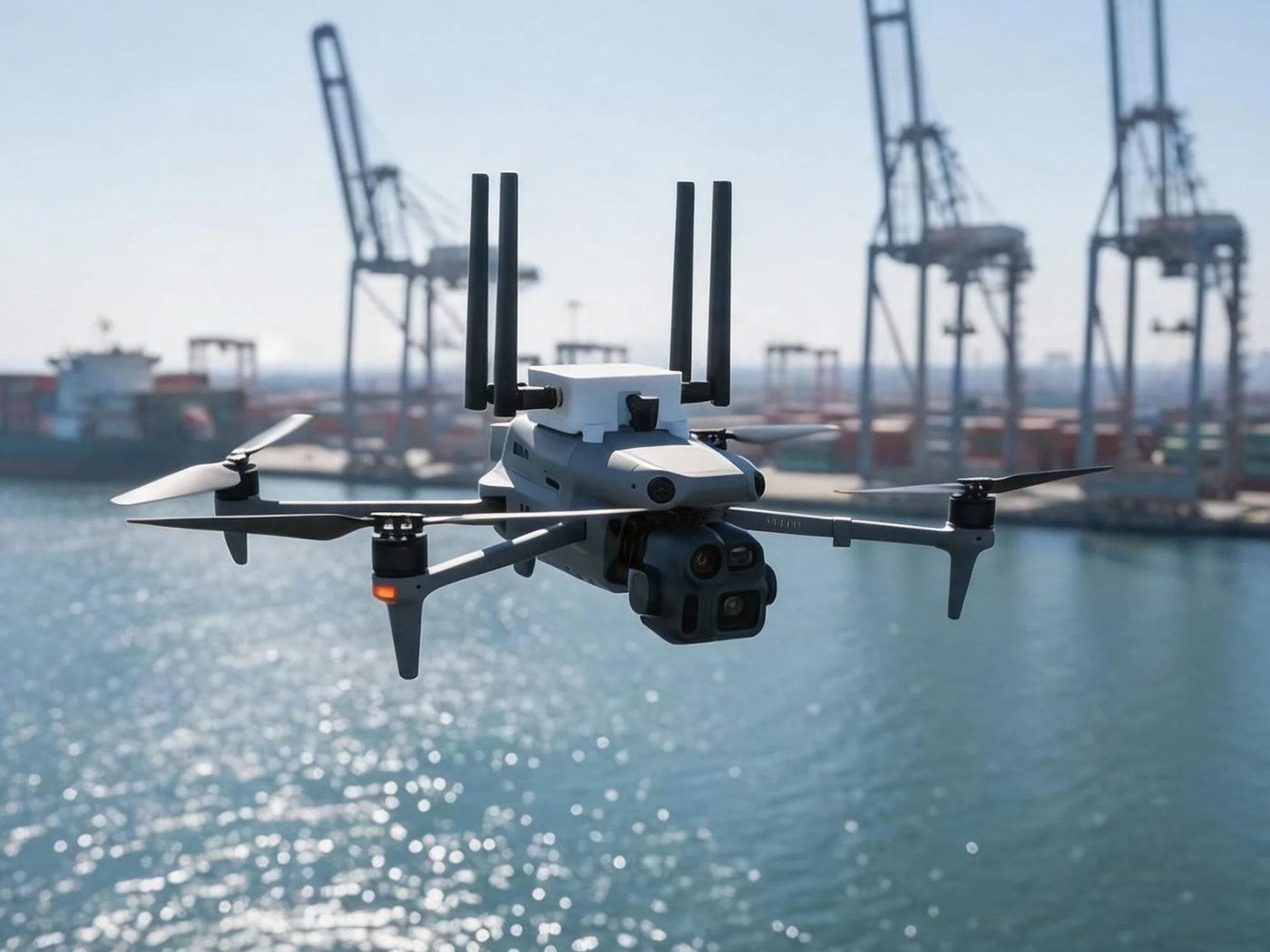
The project was developed jointly with the police UAV team of the Nanjing Public Security Bureau. Unlike the usual fixed ground detection station, this route puts detection and positioning on board the patrol drone: low-altitude targets are found and located while it flies.
Technical approach
- Airborne multi-mode detection: RID / AIS / ADS-B tri-band
- Multi-station cooperative positioning, with moving targets handled by the patrol drone
- Data goes to the cloud in real time and links to the ground command system
Award
Third prize at the 2026 BRICS Industrial Innovation Contest; first prize in the domestic qualifying round, which earned the place in the international final.
The value here is that the line of defence follows the task: a fixed station's coverage depends on where it stands, while airborne detection depends on the route, which is more flexible for temporary events, big competitions and emergencies.
Why put detection in the air
A fixed detection station covers whatever its site allows: where the station is built decides what it can see. What big events, temporary gatherings and emergencies share is that the airspace requirement moves with the task, and a fixed station can take longer to deploy than the task itself lasts. Once the capability is airborne, the route decides the coverage — the line of defence goes wherever the patrol goes.
What the system consists of
- Airborne side: airborne radio detection module, RID detection ≥ 1 km for consumer-grade targets and ≥ 3 km for enterprise-grade
- Positioning: multi-station cooperative positioning, with moving targets solved on board the patrol drone
- Data: E-Port + 5G dual-link return, linked to the ground command system
- Platform side: alerts, tracks and response records are archived for a full review after the task
Under 350 g, under 10 W, IP67 protection and an operating range of -40℃ to +85℃ — these numbers decide whether it can stay on a patrol aircraft long term: weight affects endurance, power draw affects the onboard supply margin, and protection rating affects how often it can actually fly.
The next step is to connect all three stages: detect, locate, respond. Detection and positioning are automatic today; the response stays with the on-scene commander acting on graded alerts — at a packed event that is the safer division of labour.