
Facade cleaning on high-rise buildings: why drone work took off in the last two years
Facade cleaning is the classic high-frequency, must-do job with poor working conditions. This article breaks down what the drone approach really solves and where limits remain.
The working conditions in facade cleaning are among the worst in this class of work: the surface is high up, continuous and large, and the usual methods rely either on suspended platforms and window-washing machines or on people — both limited by the building structure and both carrying the inherent risk of working at height. Drone cleaning has moved fast over the past two years not because drones fly better but because three things finally came together.
First: pressure and flow reached usable levels
Early designs lacked the pump power and payload to sustain continuous work, so cleaning never went beyond wetting the surface. Today a system like the M400 runs at 200 bar and 20 L/min with the spray gun down to 350 g — That is already a level that genuinely replaces manual scrubbing.
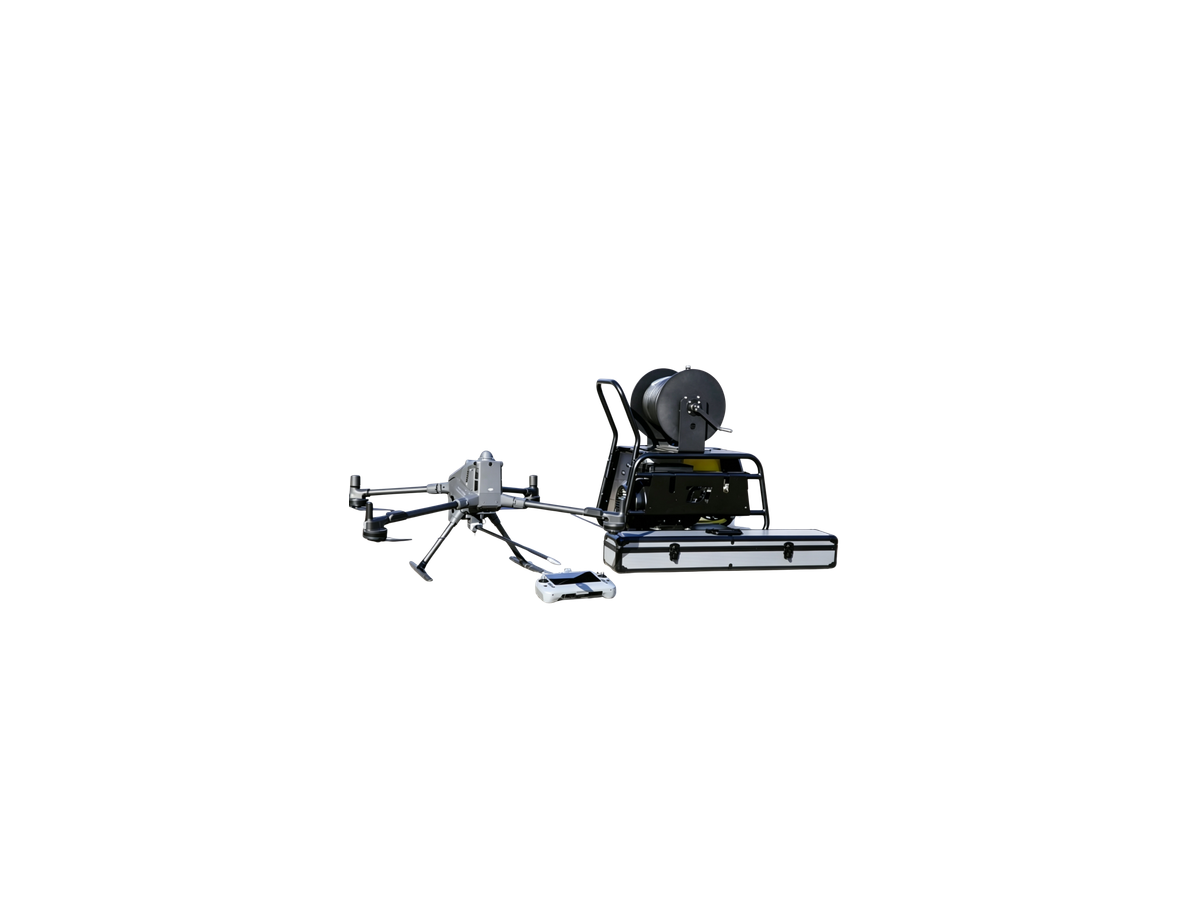
Second: path and pressure can be closed-loop controlled
Where drone cleaning goes wrong is not under-cleaning but over-cleaning: staying too long in one spot or passing twice leaves water marks on glass and can damage stone and coatings. Once the smart spray gun is coupled to the flight controller, automatic swing and constant-rate ascent turn the job into a repeatable path; with the digital twin, both pressure and path can be reviewed. This is the line between being able to fly and being able to deliver.
Third: grading by material became standard practice
Glass, aluminium panels, stone and metal grilles tolerate pressure and angle very differently; the facade-damage problem that keeps coming up in public discussion is essentially one set of parameters applied to everything. Any mature process sets the grade by material before cleaning starts.
One more often-ignored prerequisite: cleaning agents and water
The medium itself is a variable. The eco grade is pH 6–7 diluted 10–20 times, the strong grade pH 2–3 diluted 20–30 times; which one to use depends on the type of soil — dust, water marks or oily film — not on cleaning harder being cleaner. Using the strong grade at the eco dilution leaves residue and new marks on glass and aluminium frames — worse than not cleaning.
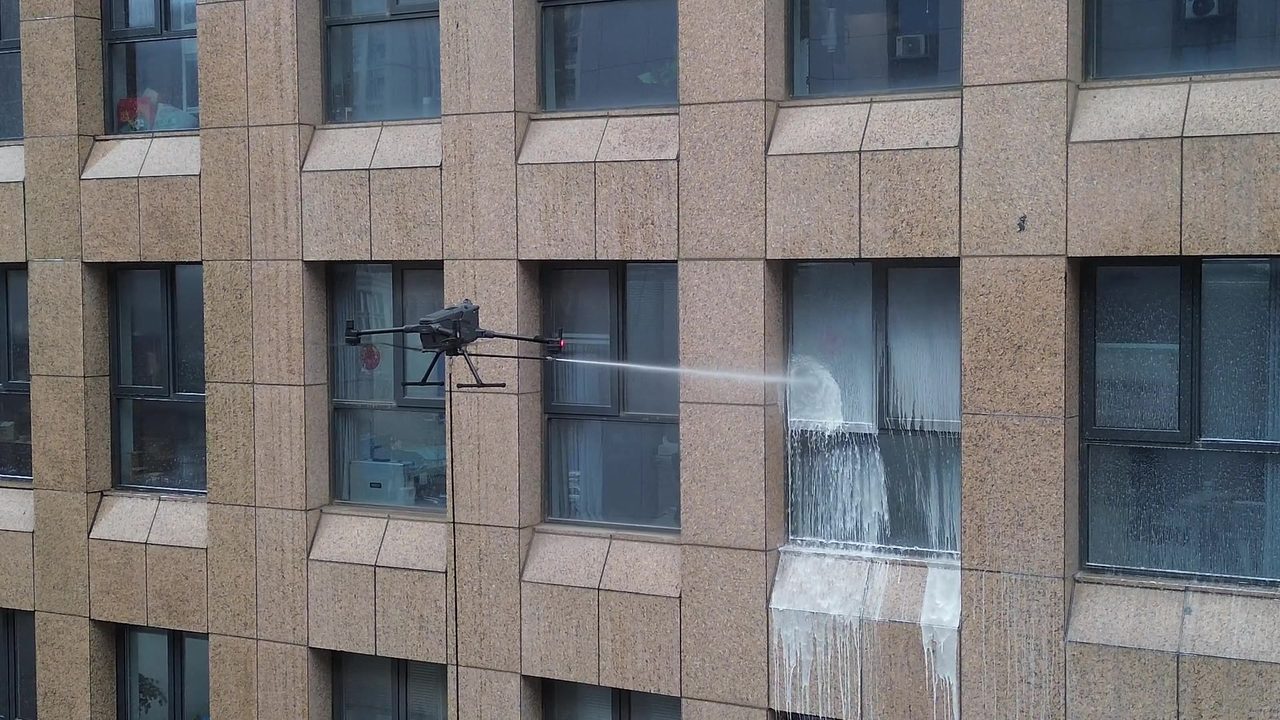
Where limits remain
- Wind at height is a hard constraint — Beyond one range the aircraft stays grounded, so work windows follow the weather
- Continuous work depends on water supply and backup power; one aircraft cannot cover a whole supertall building
- Coverage on irregular facades, recessed elevations and obstructed areas is still below what a manual platform achieves
The conclusion: the drone approach has cleared the can-it-be-used bar and is now working through how to schedule it — turning wind windows, water supply and material grading into a standard process is where the real competition sits over the next year or two.